“I ran my mouth off a bit too much, ah what did I say? Well, you just laughed it off and it was all okay. And we’ll all float on okay; And we’ll all float on okay; And we’ll all float on okay; And we’ll all float on anyway, well” – Modest Mouse, Float On
I dare you not to start dancing in your seat.
Now that the nervous energy is out let me tell you about sensory deprivation.
We are always “turned on”. By this I mean the sympathetic nervous system in relation to the parasympathetic nervous system. The second we walk out the door we are faced with sensory interaction on every level – the cold wind on our skin, walking and carrying our own weight around, the sounds, the cars and people creating constant movement and if you live in the inner city perhaps large advertisements or loud events near by.
Essentially our bodies are made to do one thing, and one thing only: survive.

When we engage with the culture of rush, or capitalism, we are forced out of our rest and digest response and into our fight or flight survival response. In a lot of ways we have been conditioned to believe that if we are not moving, we are not achieving. Slowly down is equated to coming last or being fatigued or lesser than. So, we try and keep up, developing a resistance to simply just floating on or going with the flow.
As we face this nervous response, we begin to loose touch with our authentic self. When we are constantly fighting for survival there’s no opportunity to learn who you are.
As we move through life and have experiences, we are offered the chance to either learn from experiences; crafting wisdom, or to ignore experiences, pushing them deeply inside without considering their message or the way they have fundamentally changed us. The shift from experience to wisdom, or learning, is often called integration.
Floating is a fantastic way to integrate.
It’s also a great way to cue into the rest and digest response in the nervous system and trigger or sometimes speed up healing.
What is it?
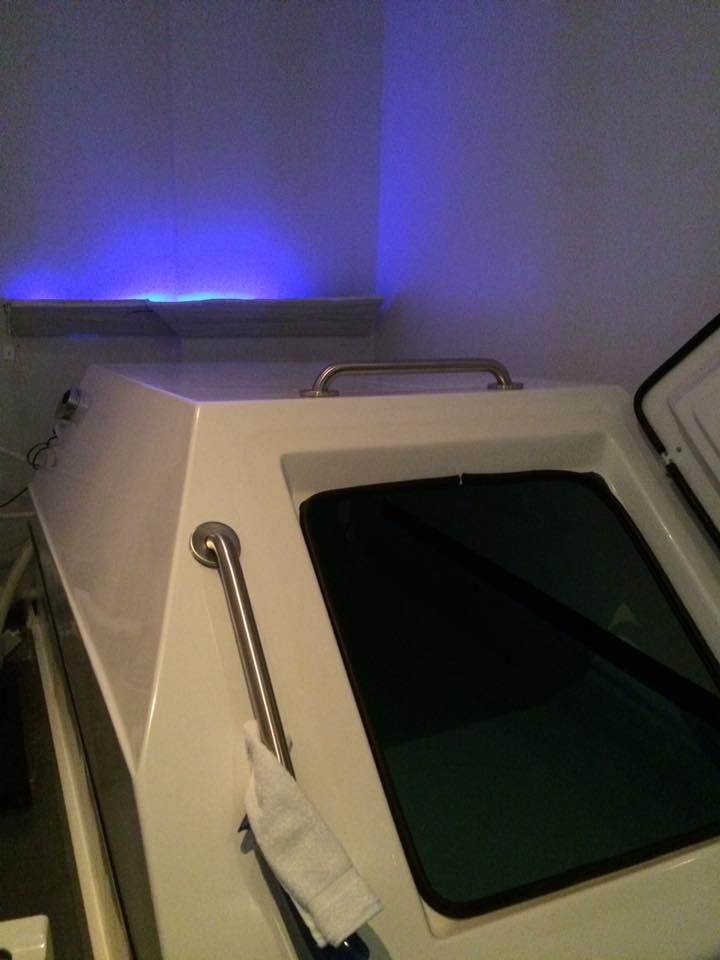
So, let’s backtrack – What the heck is floating? Floatation therapy or sensory deprivation involves the complete release of the senses. The float tank is an egg or pod shaped device that cocoons the individual in darkness and has about three feet of water containing roughly 800lbs of Epsom salts. This amount of salt allows the body to be totally released from gravity. As you close the door to the tank you are dropped into complete darkness. Each tank is insulated against sound and frankly, the heartbeat becomes as loud as a beating drum.
Water is kept neutral at skin temperature allowing for the person to loose track of where their body ends and the water begins. With the outside world completely shut off, and the body completely deactivated we have the rare opportunity to draw inward, to practice mindfulness.
When we are not fighting gravity, and not receiving any new information the body is in a prime position for healing. As the heart rate lowers with a decrease in activity, the mind is free to wander, in a more curious way. With out distraction the body is able to notice hormonal imbalances and the endocrine system is offered the ability to re-set. Dopamine and other endorphin’s are pumped out of the brain creating a more holistic sense of being – or a sense of balance.
Magnesium
Magnesium is really magic. It happens to be one of the most common nutrient deficiencies in the body during this day and age. The more processed our food is the less magnesium found in our diet. Magnesium naturally occurs in things like green leafy vegetables, nuts and beans as well as in whole grains. When our bodies are not getting enough magnesium we exhibit symptoms like fatigue, insomnia, anxiety, muscle ache, loss of appetite, muscle cramps, an abnormal heart rhythm and in extreme circumstances can change the personality of a person.
The magnesium content in the float tank has some pretty amazing benefits! First and foremost, the weightlessness paired with the pain management effects of the magnesium render the individual virtually pain free. Truly, as all the pains of the body melt away, we are only left with the discomfort of the mind.
The pain management benefits are also used to help facilitate healing in the tissues. After a pretty nasty hamstring tear, I tried everything. It wasn’t until I discovered floating once a week, that the hamstring began to repair itself. Sensation melted away, and I was able to move into the strengthening process much more quickly. Hamstring injuries are the hardest to heal because of the decreased circulation through the gluteal muscles.
Thus bringing us to our second benefit of floating, increased circulation. The increase in circulation allows muscles and joints to relax thus aiding in the relief of chronic pain or discomfort.

Pain management and increased circulation automatically rest the heart, and so as a by product the floater experiences an ease of stress.
My Personal Experience:
As an orthorexic with an eating disorder since high school, I have found floating has an enormous impact on my relationship with and around food, as well as with my body in the present moment. As I rest the nervous system my digestive system has the opportunity to fire up breaking down any old food or energy from the stomach. When the body enters it’s rest and digest function the brain – stomach relationship heals itself and the floater can experience hunger again. This digestive response is two fold, after your float once food is digested it is also metabolized properly because the body is not in a stress response.
The first thing that shuts down when stressed is your digestive system.
Floating also helped me realize that my body was magic, and that putting it through the torture of several workouts daily and not eating was causing my beautiful vessel to fail. Floating allowed me to clear my mind of worry about how I was visually perceived and opened my mind to the realization that without a rested body nothing can be accomplished.
When rested, I found I made better choices around food, because with a new type of acceptance, presupposed by forgiveness, I was able to love myself.
Yes, floating is the cause for my relationship with salad and green smoothies. Because in the tank it’s clear: You Only Get One Body. Why aren’t you loving it better?
What about Anxiety and Depression?
Floating also helped me through anxiety and depression. In the past year and a half I lost both grandparents and a close personal friend at the age of 29. I also found that friction was developing between my family members because my lifestyle was so different from their expectation of me.
These events caused me to have frequent cycling and spinning negative thoughts. Such thoughts where so powerful they began to take over my daily life, anxiety creeping into everything. In an attempt to try and feel some of the emotions plaguing me, I climbed into the tank.
The tank helps me mostly decipher between positive and negative thoughts; between those that serve me and those that do not. The tank creates a safe space to feel my emotions fully, even if momentarily, so that I can let them go, work through them or integrate them.
Flotation therapy not only offers physically space in the body but also head space. There’s no distraction – and there’s not judgement. You are free to notice yourself, and to take stock in the moment of what you want to take with you moving forward, and what you want to let go of.
The tank for me is a place to leave something behind, and where I don’t have to bring anything back to carry. Where I can set my intention to heal an old wound or to step forward into the person I want to become.
 alexatomaszewski.com